AI Dashboards & Analytics
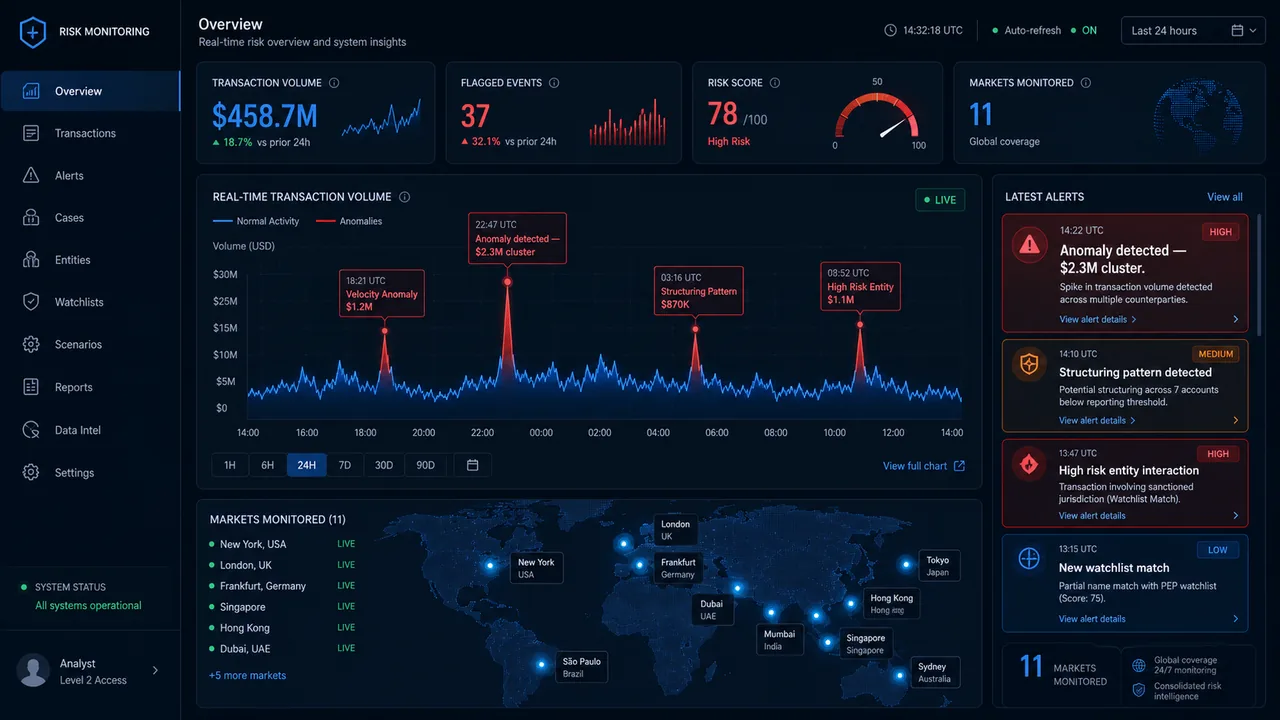
Decision-grade analytics, live metrics, anomaly alerts and natural-language queries over your data, so every team member gets trustworthy answers without waiting on the data team.
An AI dashboard is an analytics interface that goes beyond static charts: it lets users ask questions in plain English (natural-language-to-SQL), surfaces anomalies automatically, and returns governed, explainable answers. The goal is to turn your data warehouse into something every team can query safely, not just analysts.
What's included
- Real-time pipelines, Streaming and batch data flows feeding live metrics with sub-second freshness where it matters.
- Natural-language querying, Ask in plain English; get a governed SQL answer, a chart, and the query for auditability.
- Anomaly detection, Automatic alerts when a metric drifts, spikes or breaks, before a customer tells you.
- Custom report builder, Saved views, scheduled exports and a drag-and-drop builder your team actually uses.
Our approach
We model your metrics semantically first, so 'revenue' means the same thing everywhere and every answer is consistent. Then we layer NL-to-SQL with guardrails and a confidence signal, enforce row-level permissions at query time, and wrap it in a fast, legible UI.
The result is analytics leaders trust enough to run the business on, explainable, permission-aware, and quick.
From idea to shipped in four phases.
Model
Define a semantic layer and the metrics that matter.
Pipe
Wire real-time and batch data sources.
Query
Add NL-to-SQL, alerts and the report builder.
Ship
Roll out with permissions and onboarding.
Frequently asked questions
What is natural-language-to-SQL?
NL-to-SQL lets a user type a question like 'show revenue by region last quarter' and have the system generate and run governed SQL against your warehouse, returning a chart and the exact query. It removes the bottleneck of routing every data question through analysts.
How do you keep AI-generated queries accurate?
We build on a semantic model so business terms are defined once, add guardrails that constrain what the model can query, attach a confidence signal to every answer, and enforce row-level permissions at query time. Users can always see the generated SQL.
Can it connect to our existing data warehouse?
Yes. We connect to Snowflake, BigQuery, Postgres, Redshift and most modern warehouses, and adapt to your existing modeling conventions rather than forcing a migration.